Understanding the different cycles of periodized training can help you build fitness more effectively, manage fatigue and arrive at your most important events ready to perform.
A periodized training plan is divided into three main cycles:
- A macrocycle is your overall season or long-term training plan.
- A mesocycle is a focused training block within that season.
- A microcycle is the shortest planned training unit, typically one week.
Together, macrocycles, mesocycles and microcycles help you organize your training around a clear goal while balancing overload, adaptation and recovery.
What is periodized training?
Periodization is the process of dividing your training plan into structured phases, with each phase designed to support a specific objective.
Rather than repeating the same workouts throughout the year, you gradually adjust your training volume, intensity and focus based on where you are in your season. Some phases may emphasize aerobic endurance, while others may focus on threshold development, race-specific fitness or recovery.
The goal is to apply enough stress to create adaptation without accumulating so much fatigue that your performance begins to decline.
Why does periodization matter?
Fitness improves when your body is exposed to training stress, allowed to recover and then challenged again. This process is often referred to as overload and adaptation.
A periodized plan helps you manage that process more intentionally. It allows you to build different physiological abilities at different points in your season and avoid trying to improve everything at once.
For example:
- During a base phase, you may prioritize aerobic endurance, consistency and durability.
- During a build phase, you may introduce more threshold work, higher-intensity intervals and race-specific training.
- During a peak or competition phase, you may reduce overall training volume while maintaining enough intensity to stay sharp.
- During a recovery phase, you may prioritize rest and low-intensity activity before beginning another training block.
By organizing your season into distinct phases, you can build fitness progressively and arrive at your most important events with the best possible balance of fitness and freshness.
What is the difference between a macrocycle, mesocycle, and microcycle?
Each cycle serves a different purpose, but they work together as part of the same plan. Your macrocycle provides the big picture, your mesocycles define the focus of each training block, and your microcycles determine how that training is executed from week to week.
What is a macrocycle?
The macrocycle (i.e., your entire season) is the longest of the three cycles and includes all four stages of a periodized training program (e.g., endurance, intensity, competition and recovery).
Because macrocycles incorporate all 52 weeks of your annual plan, they provide you with a bird’s-eye view of your training regimen and allow you to facilitate long-range planning.
For example, if you want to peak for a national championship event one year from now, you can mark that date on your calendar and work backward to create a program that allows you to peak at that time.
You can use the same process to identify several major events throughout the year and develop a plan that facilitates multiple fitness peaks. Remember, because of its length, you will always make changes to your macrocycle throughout the year.
What is a mesocycle?
A mesocycle is a specific training block within your macrocycle. Each mesocycle is designed to target a particular adaptation or training goal.
Most mesocycles last approximately three to six weeks, although the ideal length depends on the athlete, the sport, the phase of training and the amount of recovery required.
Examples of mesocycle goals include:
- Building aerobic endurance
- Increasing training volume
- Improving muscular endurance
- Developing threshold fitness
- Adding race-specific intensity
- Improving speed or neuromuscular power
- Reducing fatigue during a recovery block
A cyclist, for example, may complete a four-week threshold-focused mesocycle that includes progressively more time near functional threshold power, or FTP. FTP is an estimate of the highest power an athlete can sustain in a quasi-steady state without fatiguing rapidly.
A runner may complete a mesocycle focused on threshold development by gradually increasing the duration of tempo runs or cruise intervals. A triathlete may use a race-specific mesocycle to add brick workouts and practice pacing across multiple disciplines.
Recovery should also be built into your mesocycles. Some athletes may respond well to three weeks of progressive training followed by one easier week. Others may benefit from shorter blocks or more frequent recovery depending on their experience, schedule and ability to absorb training stress.
What is a microcycle?
A microcycle is the shortest training cycle and typically lasts one week.
A microcycle determines how your individual workouts fit together within a broader training block. It may include higher-intensity sessions, endurance workouts, strength training, easy recovery days and rest days.
For example, a runner completing a threshold-focused mesocycle may follow a microcycle that includes:
- One threshold workout
- One speed or hill session
- Several easy runs
- One long run
- Strength training
- One or more recovery days
A cyclist completing an endurance-focused mesocycle may schedule a week with several longer rides and one recovery day. During a more intensive block, the athlete may complete two or three challenging days followed by easier training to absorb the workload.
Microcycles help you manage the day-to-day application of training stress. While your macrocycle sets your destination and your mesocycles define the route, your microcycles determine what you do each week to keep moving forward.
Training Tip → Use Performance Insights to adjust along the way
A plan gives your training structure, but it should not be set in stone. How your body responds to a particular week matters just as much as what is written on your calendar.
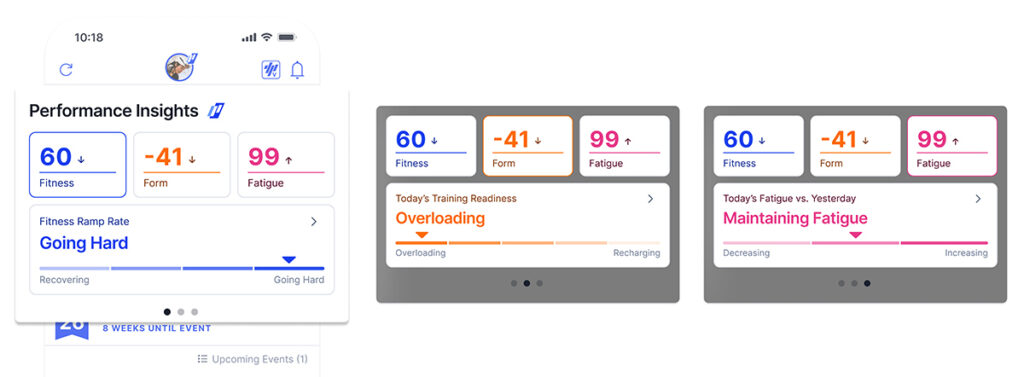
TrainingPeaks Performance Insights help you monitor trends in your Fitness, Fatigue, and Form as you move through each microcycle. If fatigue is accumulating more quickly than expected, you can adjust the next workout, add recovery or modify the week before a small problem becomes a bigger setback.
How do macrocycles, mesocycles, and microcycles fit together?
Imagine you are preparing for a half marathon in 16 weeks.
Your macrocycle, in this case, is the complete 16-week training plan. Within that macrocycle, you may divide your training into four mesocycles:
- Base mesocycle: Build consistent mileage and aerobic endurance.
- Threshold mesocycle: Add tempo runs and longer intervals to improve your ability to sustain a faster pace.
- Race-specific mesocycle: Complete workouts that reflect the demands of your goal event.
- Peak and taper mesocycle: Reduce fatigue while maintaining enough intensity to feel sharp on race day.
Each mesocycle is then divided into weekly microcycles. Your microcycles determine how individual workouts, recovery days and strength sessions are scheduled throughout each block.
This same approach can be applied to cycling, triathlon and other endurance sports.

How to build a periodized training plan
1. Choose your goal event
Start by identifying the event that matters most to you. Your goal event will determine the duration and structure of your macrocycle.
2. Work backward from race day
Once your event is on the calendar, work backward to determine how much time you have to build fitness. Consider your current training volume, previous experience and the specific demands of the event.
3. Divide your season into training blocks
Create mesocycles that focus on the adaptations you need most. These may include aerobic endurance, threshold development, race-specific fitness and recovery.
4. Plan your weekly training
Break each mesocycle into weekly microcycles. Schedule your key workouts first, then add easy training, strength work and recovery days around them.
5. Adjust as needed
A training plan should provide structure without becoming rigid. Travel, stress, illness and fatigue can all affect how well you absorb training. Review your progress regularly and make adjustments when necessary.
Training Tip → Keep your plan organized and clear
Macrocycles, mesocycles, and microcycles can be a lot to keep track of. Keeping your entire plan in one organized place makes it easier to see how each training block fits together, stay focused on your goals and adjust when life happens.
Start by adding your most important events to your TrainingPeaks calendar. Then use the Annual Training Plan (ATP) to create a clear, big-picture view of your season. The ATP helps you map out each phase of training and understand when to build fitness, increase intensity, or prioritize recovery. (Learn more about how to use the ATP here.)
As you move through your plan, TrainingPeaks also provides Performance Insights to help you understand how your body is responding to training. By monitoring trends in your fitness, fatigue and form, you can spot when fatigue may be accumulating and make adjustments before it starts to derail your progress.
Achieve your goals with a clear plan
The best training plans do more than fill your calendar with workouts. They help you apply the right training stress at the right time, recover adequately and build toward a clear goal.
By understanding macrocycles, mesocycles and microcycles, you can create a more intentional approach to your season and give yourself the best possible chance of reaching peak performance when it matters most.